| Tracey's Lessions #2 |
Are you a regular on Facebook? My FB feed has recently started to include things from "Bridge Unleashed by Tracey." If pure energy could promote (save) our game this woman has it. Here is a sample:
Tracey has started a One-a-Day lession on Facebook. Here is number #2 Go to Facebook and follow Bridge Unleashed by Tracey.
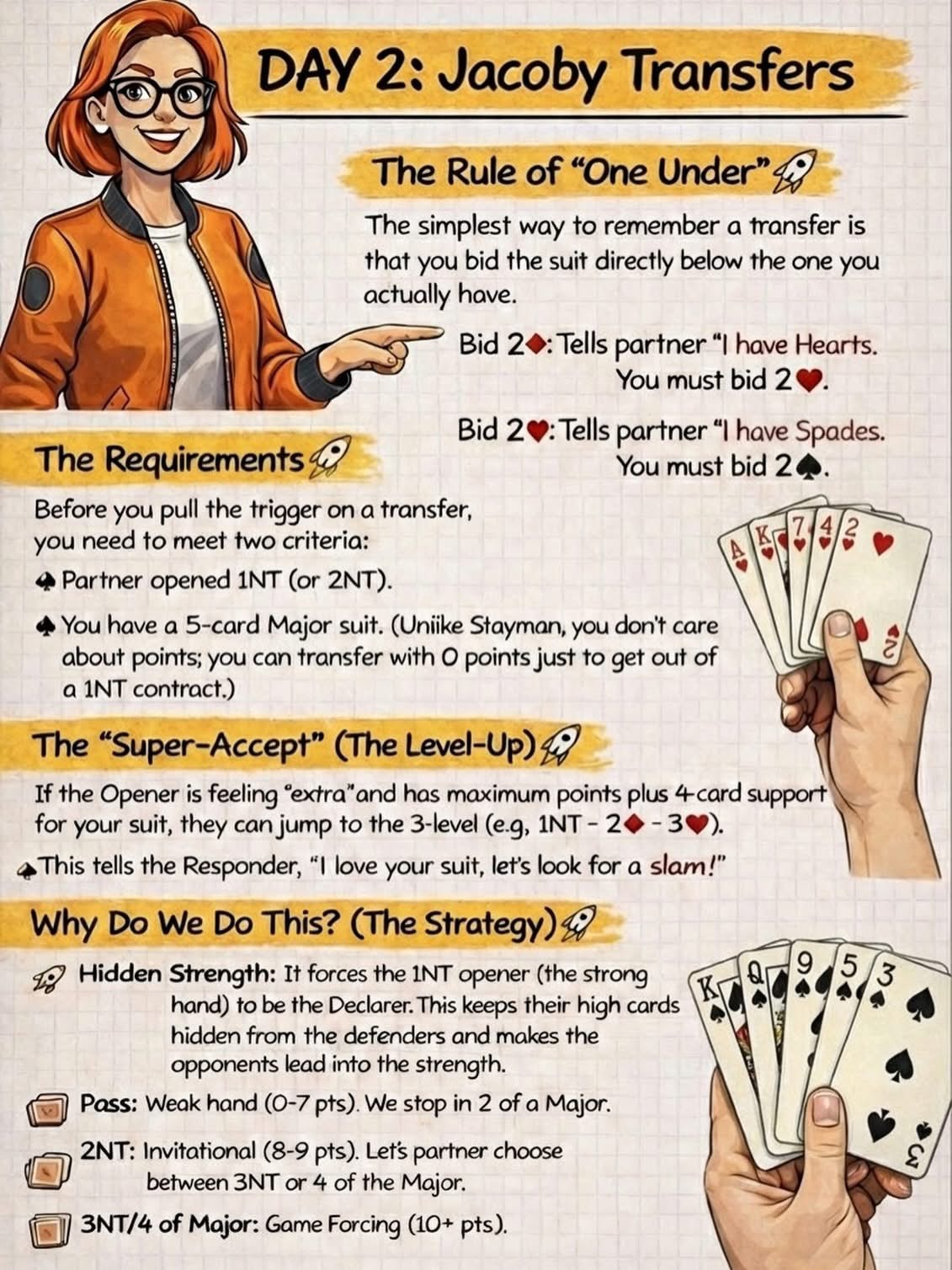
Again, credit directly to Tracey's "Bridge Unleashed" on Face Book. Or also found on her Website BridgeUnleashed.com/
More from and about Tracey
Day 2 Jacoby Transfers ♠️♥️ Jacoby Transfers: ✔ Keeps the strong hand hidden ✔ Gets to the right major fit ✔ Works with weak OR strong hands ✔ Makes bridge feel organized instead of chaotic Rule of “One Under.” Bid the suit below the one you actually have. Simple. Powerful. Elegant. Check out her FB feeds! There are dozens of pointers, terms, and conventions explained. Also interviews with well known players. I feel like a thief using any of her material but she asks it be shared and as widely as possible. "All for the the love of the game." I am excited with the depth of her explanations and in the case of this entry she has 7 comments offering further details.
Hide More about Tracey
|
|
|
|
|
|
| ACBL Zero Tolerance Explained |
I could so identify with this when I saw it on FaceBook. I just had to repost for a few days. Please go to FB and look at Bridge Unleashed the content is unbelievably good.
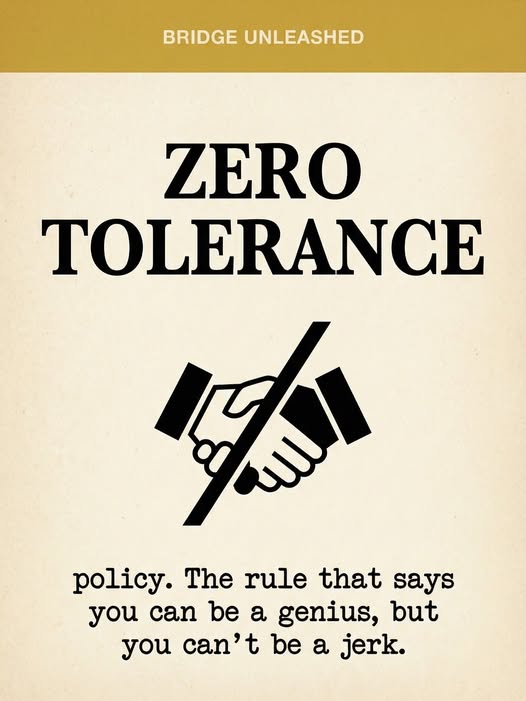
Again, credit directly to Tracey's "Bridge Unleashed" on Face Book. Or also found on her Website BridgeUnleashed.com
|
|
|
|
|
|
| Four Suits Four Messages (Copy) |
I thought the four messages were great but the "Club" is by all means true.
Please go to FB and look at Bridge Unleashed the content is unbelievably good.
If the print is too small try a double click and a new tab.
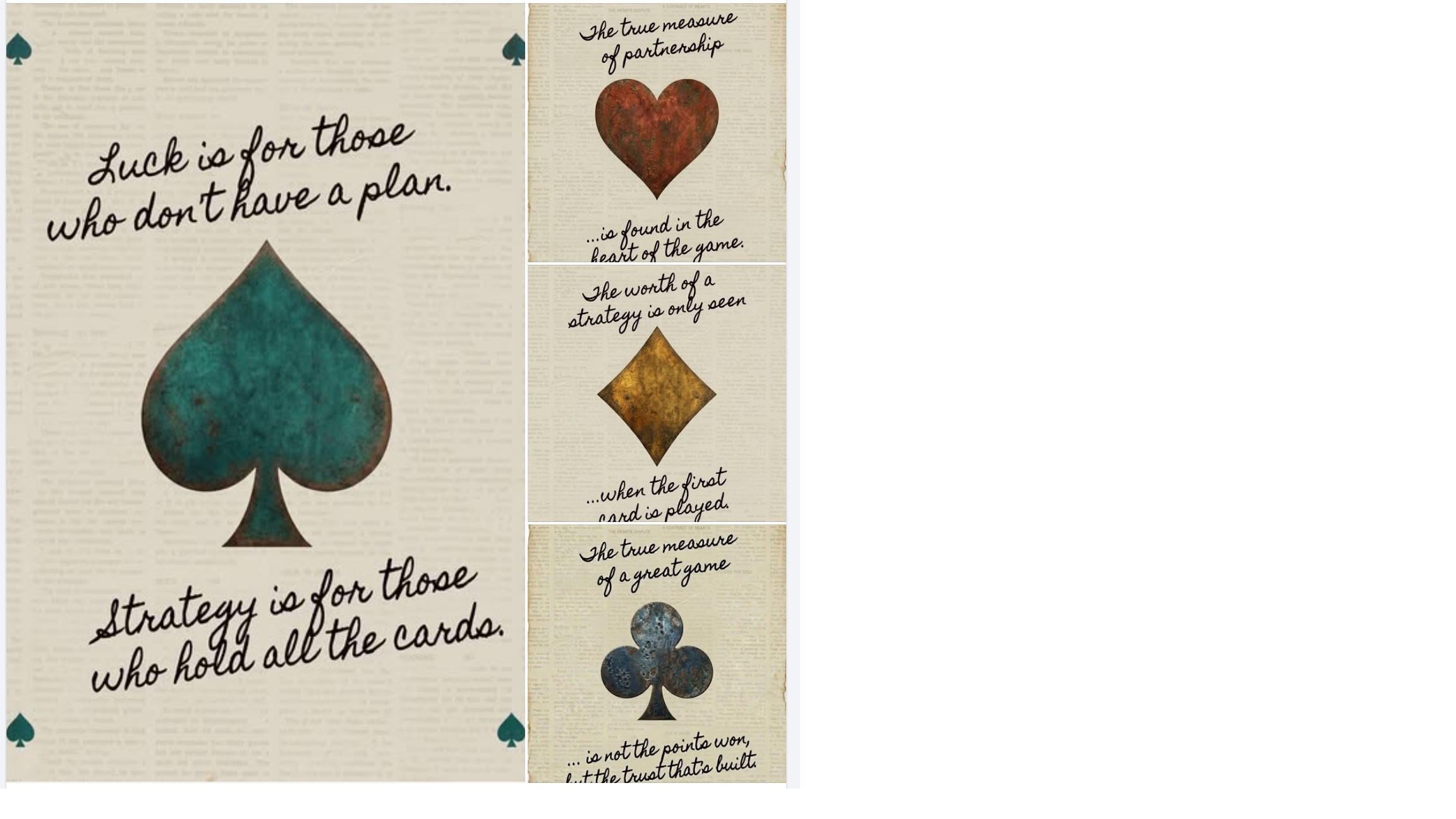
Again, credit directly to Tracey's "Bridge Unleashed" on Face Book.
Or also found on her Website BridgeUnleashed.com
|
|
|
|
|
|
| Tracey’s Preview Sylabus |
Tracey is setting the stage for next series of cards.
Please follow Bridge Unleashed on FB. Her content is unbelievably good. It is available on FB and by a free newsletter directly from her site
If the print is too small try a double click and a new tab.
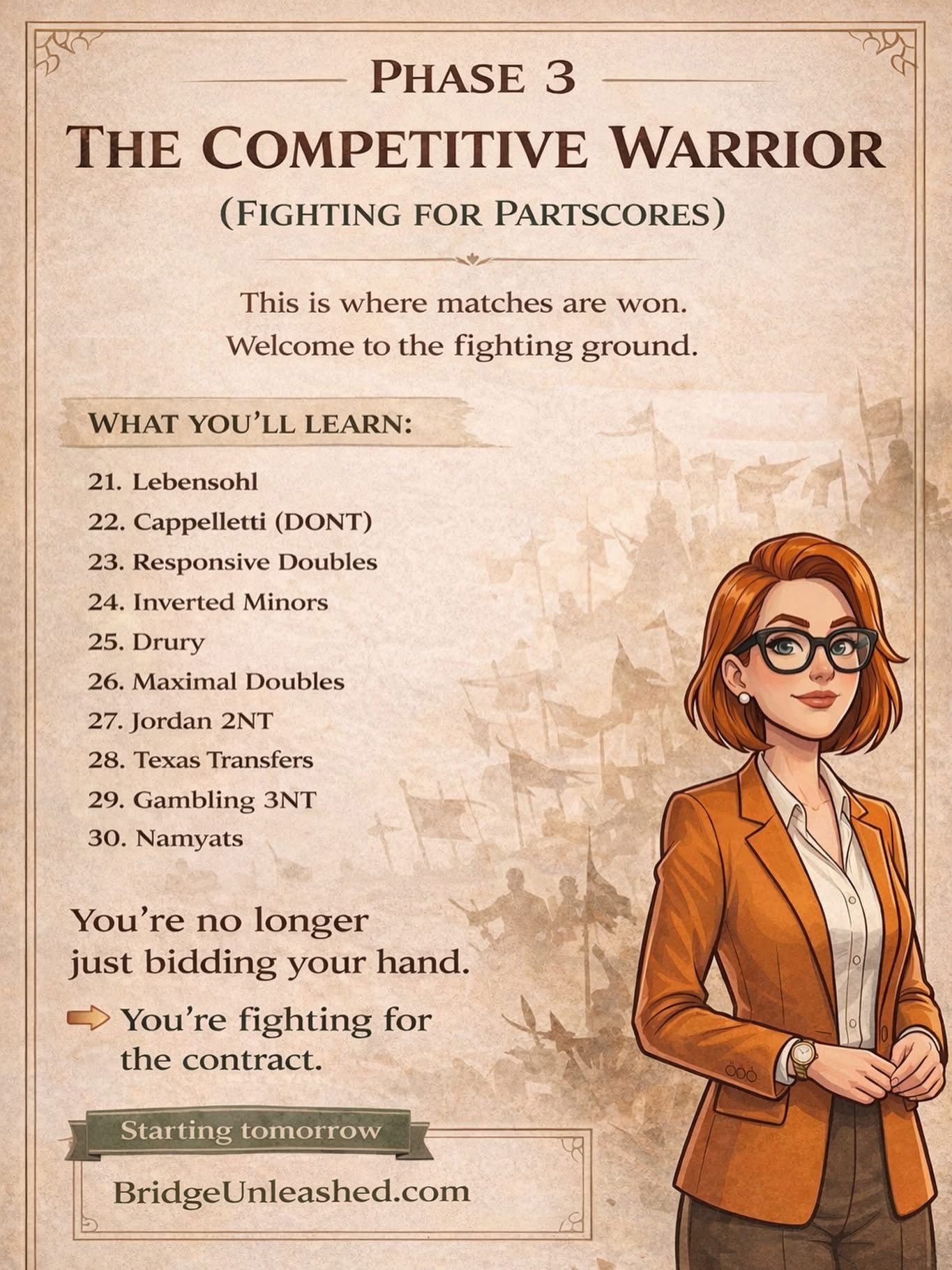
Again, credit directly to Tracey's "Bridge Unleashed" on Face Book.
Or also found on her Website BridgeUnleashed.com
|
|
|
|
|
|
| You WHAT?!? |
I could so identify with this when I saw it on FaceBook. I just had to repost for a few days. Please go to FB and look at Bridge Unleashed the content is unbelievably good.
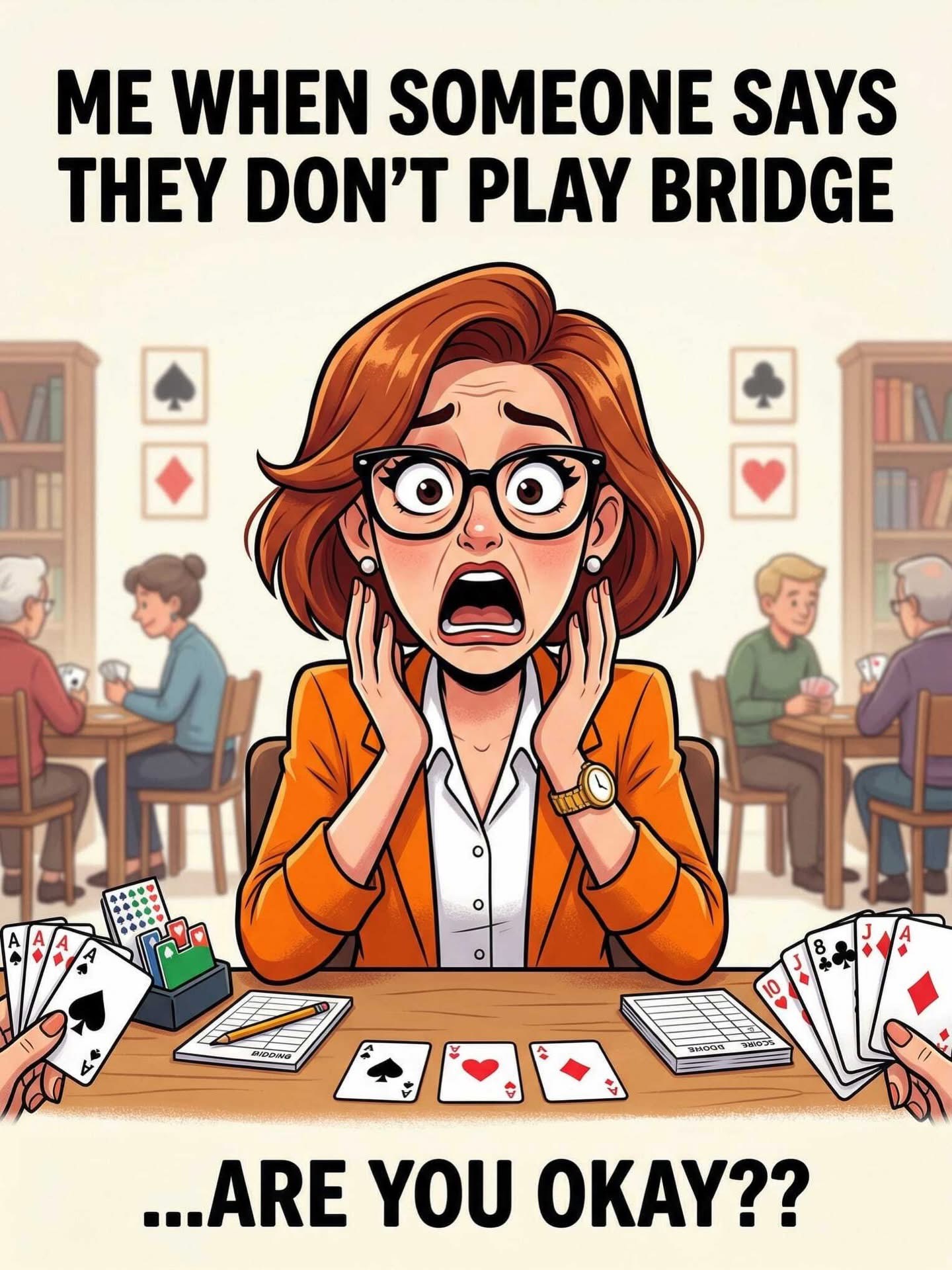
Again, credit directly to Tracey's "Bridge Unleashed" on Face Book. Or also found on her Website BridgeUnleashed.com
|
|
|
|
|
|
| Mel's Rule |
Another poster from Bridge Unleashed by Tracey as found on Facebook. The poster is better than ‘good’ but her comments as reproduced below expand and complement the basic poster. Follow Tracey and Bridge Unleashed for the full impact of her materials.
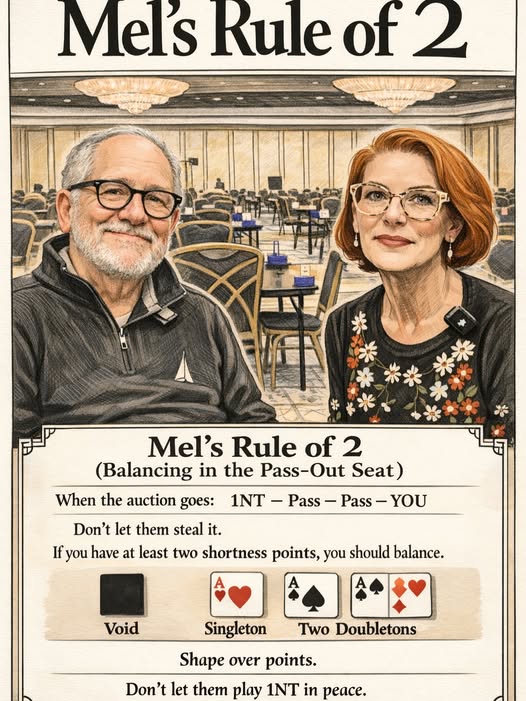
Tracey's Comments on Mel's Rule
MEL’S RULE OF 2 — THE REAL LESSON
Mel didn’t just teach a rule. He taught courage.
When the auction goes:
1NT – Pass – Pass – ?
Most players think:
“I only have 8 or 9 points. I guess we’re done.”
Mel thought:
“Wait a second. What does the shape tell me?”
What You Should Be Thinking in the Balancing Seat
After 1NT – Pass – Pass – YOU:
- How many shortness points do I have?
- Void = 2
- Singleton = 1
- Two doubletons = 2
- Is my hand shapely or flat?
- 4333 → Probably pass.
- 5422, 6322, 5332 with a singleton → Now we’re talking.
- Where are the points sitting?
If RHO opened 1NT (15–17), the deck is compressed:
- Your partner has values.
- The opponents don’t have everything.
- What happens if I pass?
They play 1NT—quietly, comfortably, unpressured.
Mel hated that.
Why Shape Matters More Than Points
- In direct seat, you need real strength.
- In balancing seat, the math changes.
- Your bid gives partner a second chance.
When the auction dies low, both sides often have something.
Your shortness suggests:
- There is a fit somewhere.
- Partner has length opposite your shortness.
- Competing is often right even with light HCP.
This isn’t recklessness. It’s probability.
What Partner Should Remember After You Balance
After 1NT – Pass – Pass – 2♣ (for example):
- You are balancing.
- You are not showing full values.
- Your hand is distributional.
- Partner must adjust.
Partner’s Adjustments
1. Don’t hang partner.
Balancing bids are “borrowed strength.” Partner must compete more freely.
If you balance 2♥ and partner has:
Partner should usually raise—because you might have only 8–11.
2. Re-evaluate point values.
- Aces/Kings go up.
- Queens/Jacks in their suit go down.
- Shortness opposite partner’s suit becomes gold.
3. Understand vulnerability and scoring.
- At IMPs: compete aggressively.
- At matchpoints: protect the partscore.
When You Should NOT Balance
- 4333 shape
- No shortness
- Scattered values
- Defensive hand sitting over declarer
Flat hands defend better. Shapely hands compete better.
The Real Philosophy
Mel’s Rule of 2 was about:
- Understanding pressure
- Refusing to be passive
- Forcing opponents to guess
The side that applies pressure more often wins more often.
Advanced Thought
When balancing over 1NT, ask:
- Which suit would declarer least want me to lead?
- Where is opener short?
- Does my bid improve partner’s opening lead?
Balancing affects the contract, the lead, the defense, and the scoring battle.
Final Thought
Mel’s Rule of 2 isn’t wild. It’s recognizing when the auction is lying to you.
When it goes:
1NT – Pass – Pass – ?
Sometimes the bravest, smartest word at the table is:
“Two.”
Hide Tracey's Comments
|
|
|
|
|
|
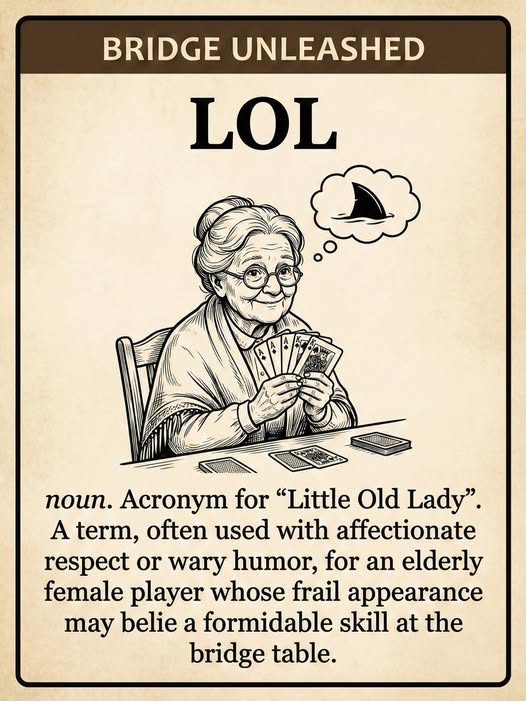
| The Little Old Lady |
The Uniform 
Topic: How to spot them:
The classic LOL is often described as the "Little Old Lady in Tennis Shoes".
The Look: Sensible footwear (for endurance), a cardigan (venues are cold), and a tote bag filled with convention cards from 1974.
The Vibe: They spend the first minute chatting about grandchildren to lower your guard.
The Reality: Once the cards are out, the grandmother persona vanishes, replaced by a cold-blooded card assassin.br>
Again, credit directly to Tracey's "Bridge Unleashed" on Face Book. Or also found on her Website BridgeUnleashed.com/
|
|
|
|
|
|
| Tracey Bridge Crimes |
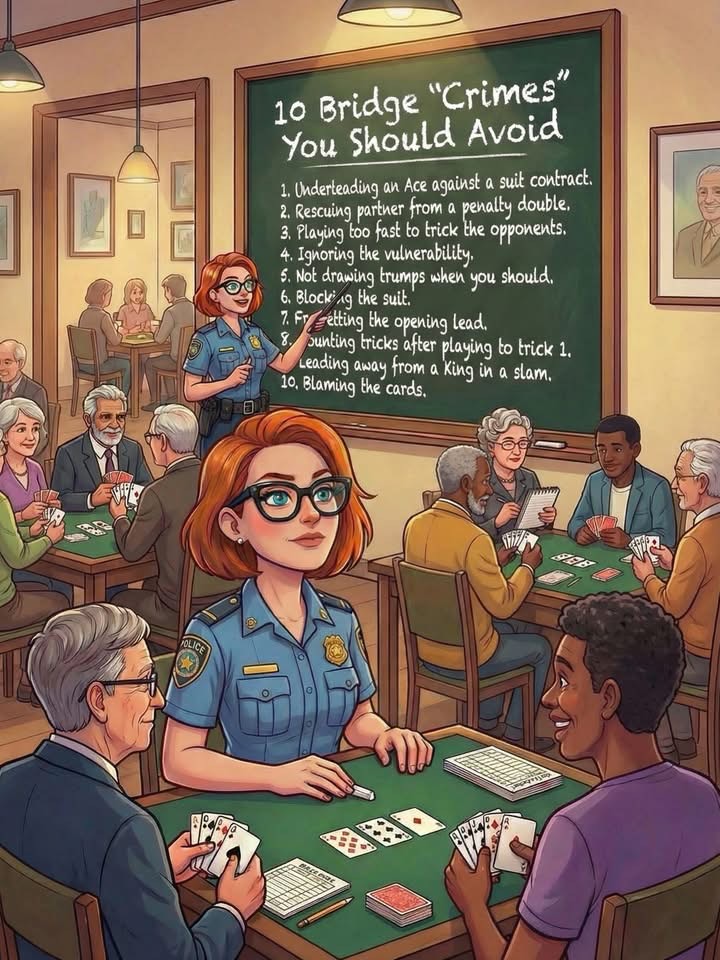
Jump on board in the comments, you should be able to add a few crimes to the list.. (Yes you will need to sign in to leave a comment.)
|
|
|
|
|
|